

Cabrera National Park by private yacht
South of Mallorca, the Cabrera Archipelago is a maritime and terrestrial national park where access by sea is carefully regulated. That is exactly why it feels untouched, and why arriving by private yacht, with your permits and a park buoy arranged in advance, is the most rewarding way to know it.
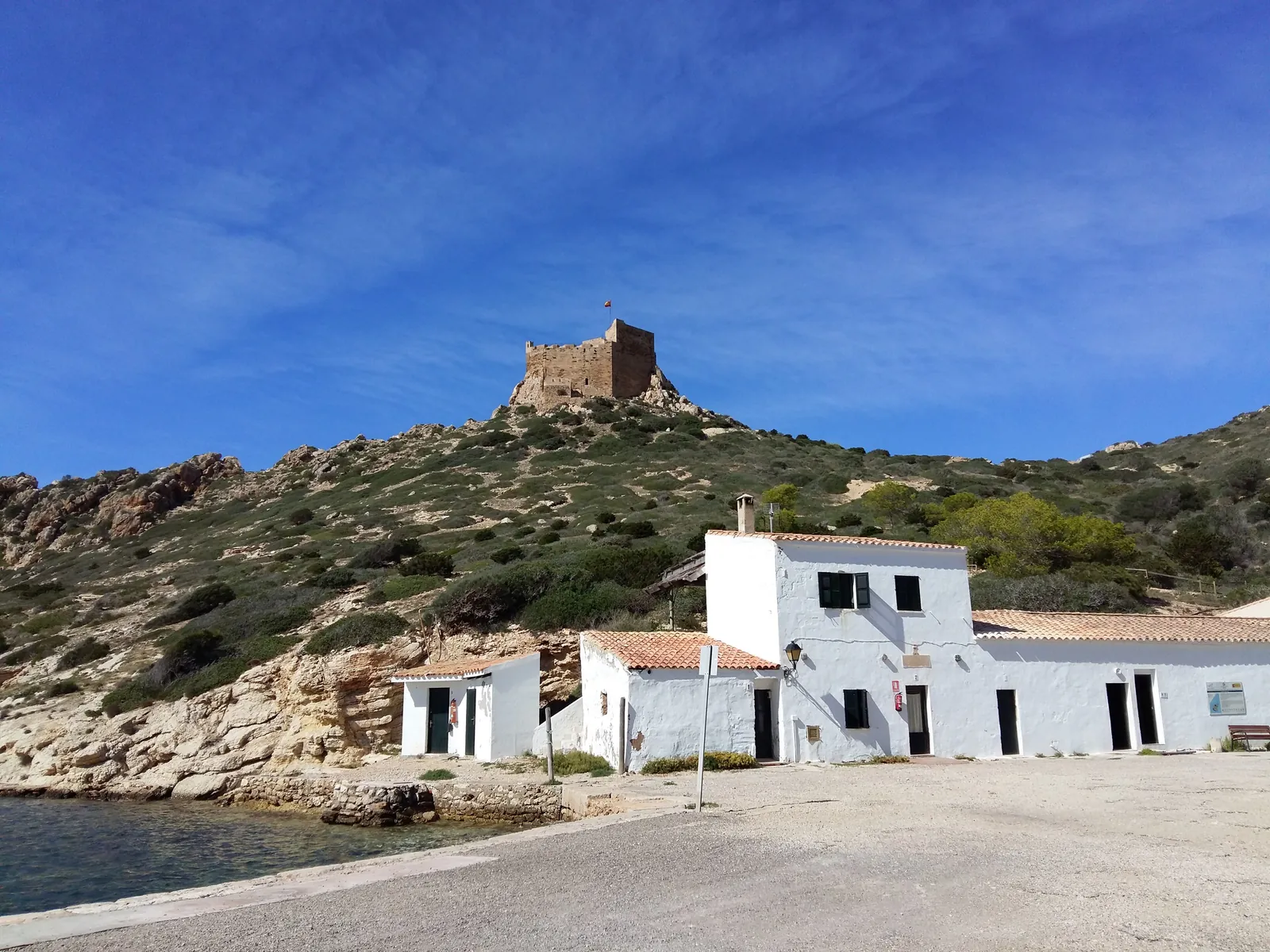
Photo: Chixoy, CC BY-SA 3.0, Wikimedia Commons
The Cabrera Archipelago Maritime-Terrestrial National Park lies off Mallorca's southern coast, facing Colònia de Sant Jordi. Created in 1991 and extended in 2019 to take in a wide stretch of open sea, it now covers more than 90,000 hectares, almost all of it water. Above the waterline sit the main island of Cabrera, the island of Conillera and a scatter of islets, ringed by coves, small beaches and high cliffs. There are no resorts, villas or marina: only a natural harbour, a fortress and a handful of park buildings. For a yacht charter guest, that is the appeal.
Below the surface, the park is even more striking. Rainfall is scarce, so little silt reaches the sea and the water is remarkably transparent. Posidonia meadows grow down to around 45 metres, which the park describes as their maximum known depth, underwater walls drop as deep as 90 metres around the southern islets, and loggerhead turtles, Balearic shearwaters and ospreys are among the residents. Sport fishing is banned throughout, with only traditional professional fishing allowed, and it shows in the life you see when snorkelling from the swim platform. The park singles out Sa Cova Blava, the Blue Cave, as a unique experience.
Visiting by private yacht takes planning. Sailing inside the park requires a navigation authorisation, and an overnight stay needs a separate booking for a mooring buoy in Es Port, the natural harbour on the north of the main island. Anchoring is prohibited throughout, so the yacht always lies on a buoy. Your captain, helped by our team, requests both in advance, chooses a settled weather window for the crossing and shapes the day around the park rules: tender to the dock, a walk on a self-guided trail, lunch aboard, then a long swim. As Cabrera lies some way south of Palma, it suits a faster motor yacht on a full day, or better still a night in the harbour as part of a week along Mallorca's south-east coast.
- / 01
Remarkably clear water
Low rainfall and almost no run-off leave the park's water exceptionally transparent, over Posidonia meadows and steep underwater walls.
- / 02
A night in Es Port
Sleep on a park buoy in a natural harbour, with the castle above its entrance and only a few buildings ashore.
- / 03
History ashore
A fortress thought to date from the late 14th century, built against pirates, plus the Es Celler museum and a monument to the Napoleonic prisoners held here.
- 01
Es Port (Cabrera Harbour)
The park's overnight mooring: buoys booked in advance and allocated by yacht length, with a two-knot speed limit in the bay. Stays are capped at two nights in July and August and seven the rest of the year.
- 02
Es Burrí
A bay with the park's largest set of free day buoys, used first come, first served from an hour after sunrise to an hour before sunset. They are reserved for boats up to 15 metres holding a navigation permit, so larger yachts stay on their booked buoy in Es Port.
- 03
Sa Platgeta
A small beach on the harbour bay, reached on foot by the track that runs around the bay from the port, shaded by pines and junipers. A quiet place to swim and snorkel from the shore.
- 04
Colònia de Sant Jordi
The Mallorcan harbour facing the archipelago and home of the park's Ses Salines Visitor Centre. A natural staging point before or after the crossing, depending on the yacht.
Ashore
- Follow the Es Castell trail towards the late 14th-century castle above the harbour entrance; the park lists the view of the bay from the castle among its must-sees, although the castle building itself is currently closed for safety reasons.
- Visit the Es Celler Ethnographic Museum, in the restored old cellar building, and the botanical garden on the same self-guided route. Entry to the museum is free.
- Follow the self-guided path to the monument to the Napoleonic soldiers, raised in 1847 for the French prisoners held on Cabrera between 1809 and 1814.
- Take the trail to the Coll Roig viewpoint, which looks towards the N'Ensiola lighthouse. The lighthouse itself is currently reached only on visits guided by park staff, which are free but need a reserved place.
Questions Cabrera
/ 01Do we need a permit to visit Cabrera on a charter yacht?
Yes. Sailing inside the national park requires prior authorisation, and staying overnight needs a separate booking for one of the mooring buoys in Es Port. Both are requested online before the charter, and our team can help your captain with the requests.
/ 02Can a large yacht or superyacht stay overnight at Cabrera?
The harbour buoys are allocated by length in bands up to 35 metres. Yachts above that need a special authorisation from the park, which may be granted with prior justification, so for larger yachts the request is raised early and an alternative is planned in case it is not granted. Stays are limited to two nights in July and August and up to seven the rest of the year.
/ 03Can we use jet skis or go fishing in the park?
No. The park does not allow nautical sports or water vehicles other than authorised ones, apart from the yacht's tender, and sport fishing is prohibited throughout. Swimming and snorkelling from the yacht are very much part of the visit, and the clarity of the water makes them special.
Let's plan your day at sea
Tell us your dates, your group and the kind of day you have in mind. We reply with yacht options and a route idea.