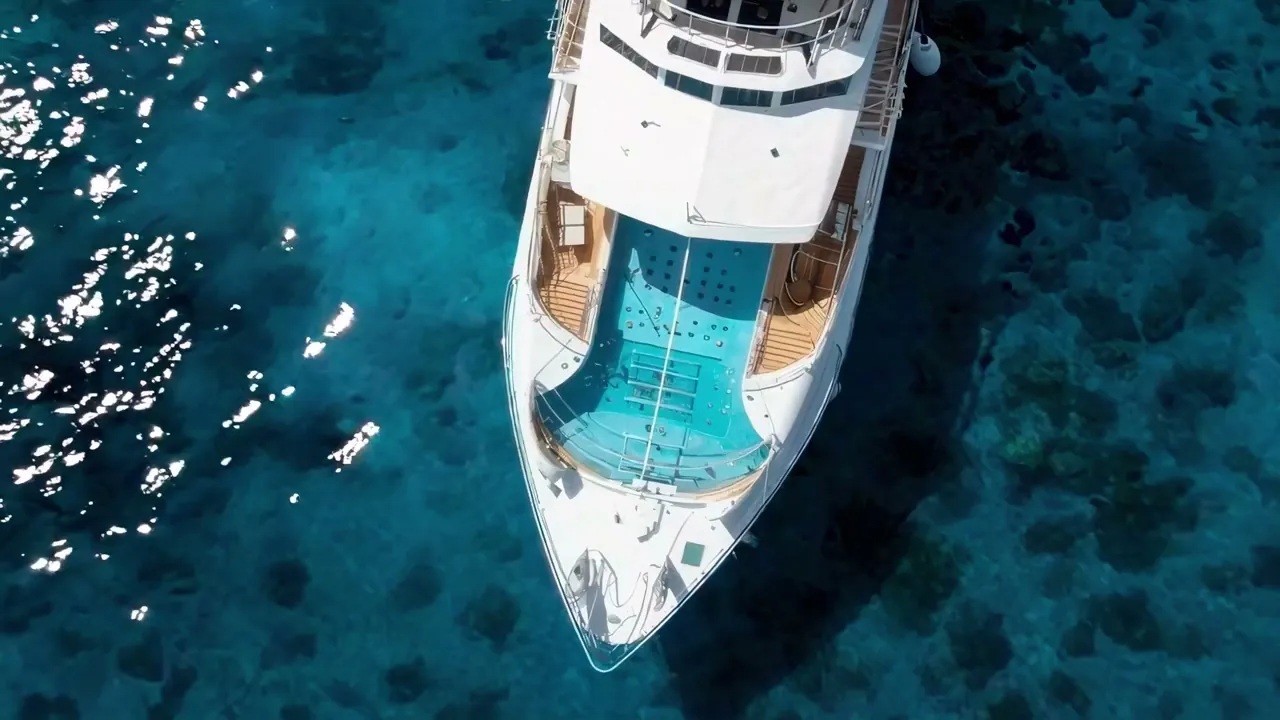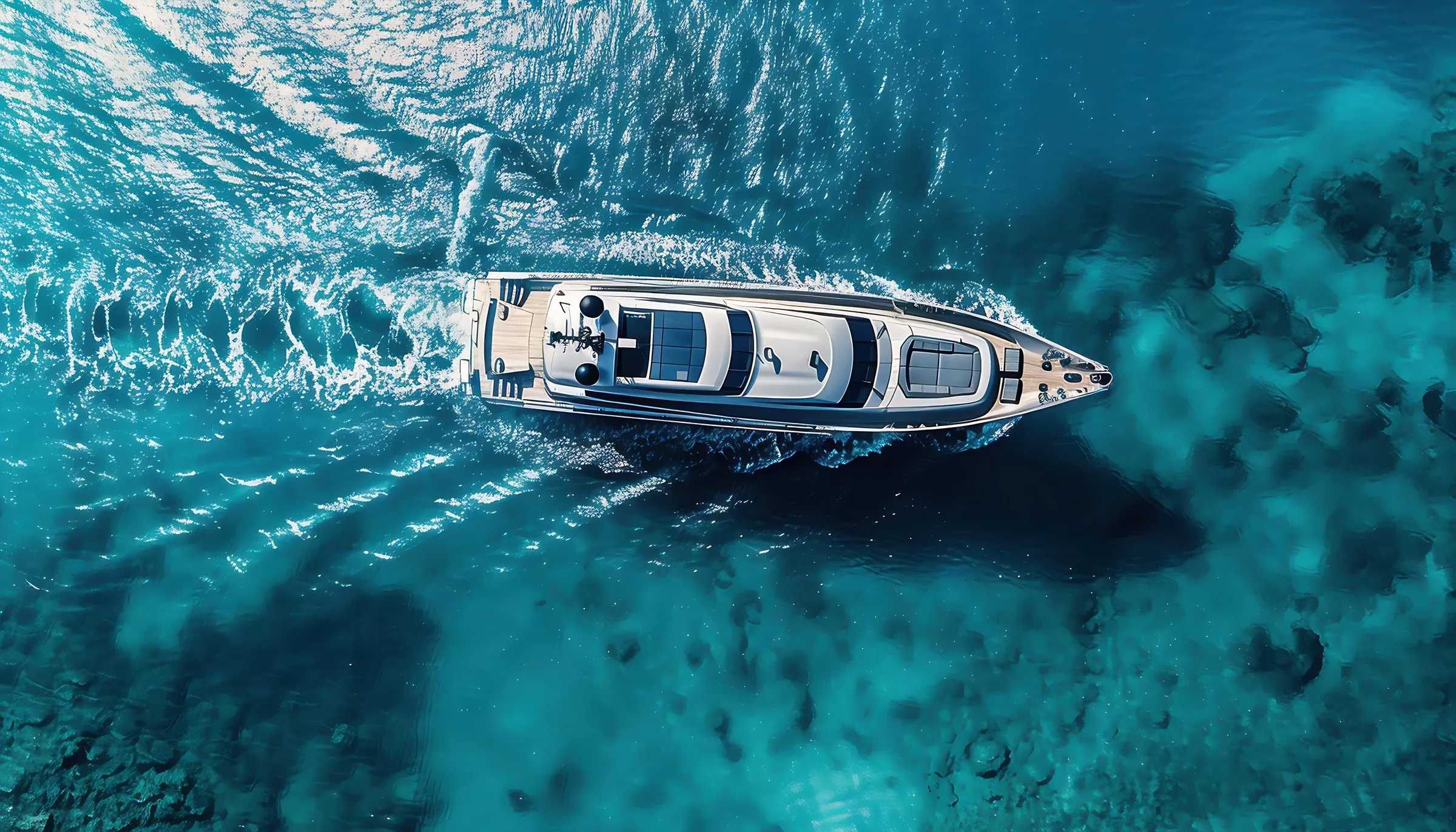
Sand rather than seagrass, the yacht outside the swimming buoys, engines off before the ladder goes down, toys used with care and an eye on jellyfish and sun: how a good swim stop comes together off Mallorca.
The perfect swim stop on a yacht charter in Mallorca is less about a secret cove than about getting a few things right at once: sheltered water, the anchor on clean sand rather than seagrass, the yacht outside the beach's swimming zone, the engines stopped before anyone climbs down the ladder, and an eye on jellyfish and the sun. Every charter with Serman Yacht Charter runs with a professional captain who handles most of it; knowing the reasoning simply makes the swim more relaxed.
Choosing where to stop
The forecast draws the shortlist. Your captain reads the morning conditions and picks calm coves, and because Mallorca has coasts facing every direction, there is often a sheltered alternative. Spain's maritime rescue service, Salvamento Marítimo, is frank about swimming from a boat in open water: climbing back aboard can be hard, so a ladder should be ready, a line should trail in the water to hold on to, and a responsible person should always stay on board. For particular places, our guide to the finest anchorages near Palma goes cove by cove.
Sand, not seagrass
Posidonia oceanica seagrass is protected by Balearic Decree 25/2018, which prohibits anchoring on it as a general rule and also forbids the chain or other gear from reaching a nearby meadow. Over seagrass, the only way to stop is an authorised buoy or a regulated buoy field. So the captain looks for clean sand with room to keep the chain clear of the meadow, which may mean anchoring a little further out and taking you closer in by tender. Our guide to Posidonia and anchoring in Mallorca explains the decree and the buoy fields in detail.
Swimming zones and speed near the shore
In summer many beaches are marked off with a line of buoys. Spain's General Coastal Regulations (Royal Decree 876/2014, article 73) prohibit recreational boats and any craft under sail or motor inside a properly buoyed swimming zone, and boats may only reach or leave the beach through marked channels. Where the coast is not buoyed, the swimming zone is taken to be a strip 200 metres wide off beaches and 50 metres wide along the rest of the coast, and no boat may travel faster than three knots within it.
The navigation and safety rules of the Palma maritime authority (Capitanía Marítima) add that boats may not anchor inside a buoyed swimming zone, moor to its marker buoys or anchor in the access channels, which they must use at no more than three knots or the minimum speed needed to steer. The same rules require boats to stay at least 25 metres from the buoys that mark divers below. So the yacht anchors outside the line, and you reach the beach by tender through the channel or with a swim, where the rules allow.
Engines off, ladder down
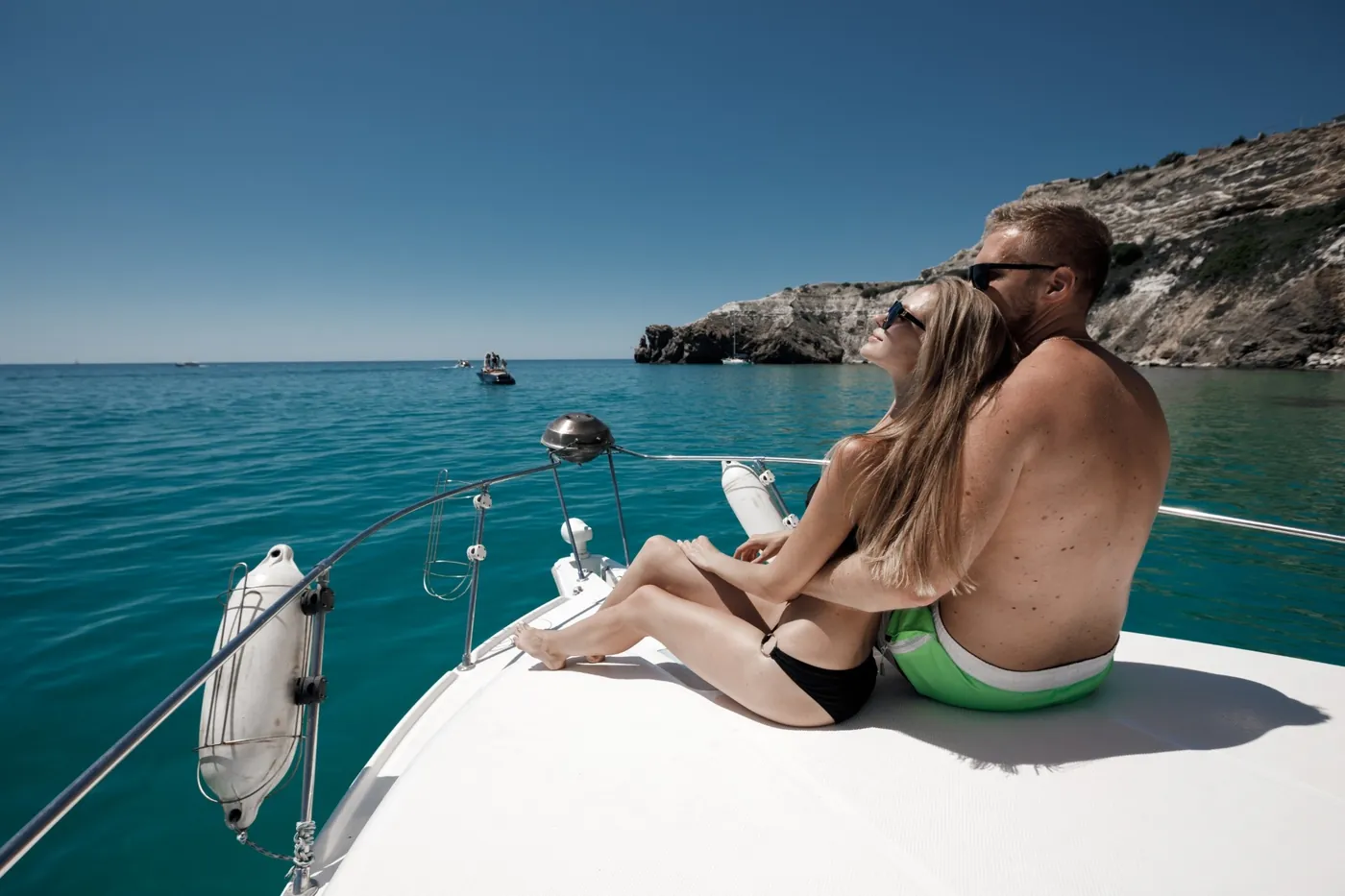
The stern is where swimmers climb back aboard, and also where the propellers and exhausts are, so the order of things matters. Salvamento Marítimo warns against bow riding, sitting right on the bow with legs over the side while the boat is moving: a wake, a bigger wave or a change of course can throw someone into the water under the hull and towards the propeller, and the service tells skippers to forbid it outright. The bow is a lovely place to sit at anchor; under way, keep your legs inboard.
Exhaust is the less obvious risk. Marine Safety SA, the South Australian government's boating authority, warns that carbon monoxide, a colourless and odourless gas, can gather around the rear deck and swim platform of boats with exhausts at the stern, and advises swimmers to stay away until the engine or generator has been off for at least 15 minutes. A sensible routine at every stop:
- Wait for the crew to confirm that the engines are stopped and the ladder is down before anyone goes in.
- Climb down the ladder or step off the platform feet first; the Balearic emergency service advises against diving in head first.
- Keep clear of the stern and the swim platform whenever an engine or generator is running.
- Hold the trailing line if you tire, and get out at once if you feel chills or cramp, as the Balearic emergency service advises.
- Tell the crew before swimming off towards the shore.
Water toys and who can use them
Toys vary a great deal between yachts. Most in our fleet list a paddleboard and snorkelling gear; some add Seabobs, an e-foil, wakeboards, waterskis or towables, and several list no toys at all. Each yacht's page shows what she carries, so mention your favourites when you plan.
On a paddleboard, Salvamento Marítimo recommends a buoyancy aid and a leash, staying fairly close to the coast, not going out in winds above 10 knots and avoiding wind that blows from the land out to sea. For waterskiing, its advice is a suitable boat with a qualified driver and a second person watching the skier, at least 200 metres from beaches and 50 metres from the rest of the coast, and a lifejacket at all times. The Palma rules likewise require users of kayaks, paddleboards, jet skis, waterskis and towed inflatables to wear one.
Jet skis are different. Royal Decree 875/2014 on recreational boating qualifications expressly excludes them from the licence-free exemption for small boats and beach craft; the navigation licence issued by sailing and motorboating federations and nautical schools covers jet skis, as do the higher recreational qualifications. Salvamento Marítimo adds that drivers must be 18, or 16 with written consent from a parent or guardian, that driver and passenger wear an approved lifejacket, and advises keeping more than 200 metres from the beach. The Princess V70's toy list, for example, gives her jet ski as available with a licence, so raise it when planning.
Jellyfish
The Balearic emergency service, 112 Illes Balears, advises against going in during a bloom, not even at the water's edge, because fragments of tentacle can still sting, and warns that dead jellyfish keep their sting for up to 24 hours as they dry. For long spells in the water it suggests protective clothing such as lycra or a wetsuit. If someone is stung, the service advises:
- Leave the water, and do not rub or scratch the area or clean it with a towel or sand.
- Remove any tentacle remains with tweezers, gloves or the edge of a card, never with bare fingers.
- Rinse with sea water, never fresh water, which makes the remaining stinging cells release more venom.
- Apply cold for 10 to 15 minutes in a well-sealed bag, never with ice directly on the skin.
- Go to the nearest hospital if nausea, vomiting, dizziness, cramps or a headache follow, and see a doctor after any sting from a Portuguese man o' war, which can cause anaphylactic shock.
Sun on the water
The World Health Organization notes that water and sand reflect UV and raise exposure, that UV can be high even under cloud, and recommends sun protection whenever the UV index reaches 3 or above, with less time in the midday sun and more in the shade. Our guide to what to pack covers hats, sunglasses and sun cream.
Planning your swim stops
The best swim stops are planned loosely and decided on the day. Tell us how your group likes the water, whether long swims to the beach, snorkelling along the rocks, children keen on the paddleboard or a guest hoping for a jet ski, and we will shortlist yachts whose size and toys suit it. The captain then chooses the coves around the wind, the seabed and the swimming zones. To start planning, send your dates and group size by WhatsApp, email or the form, with prices on request.