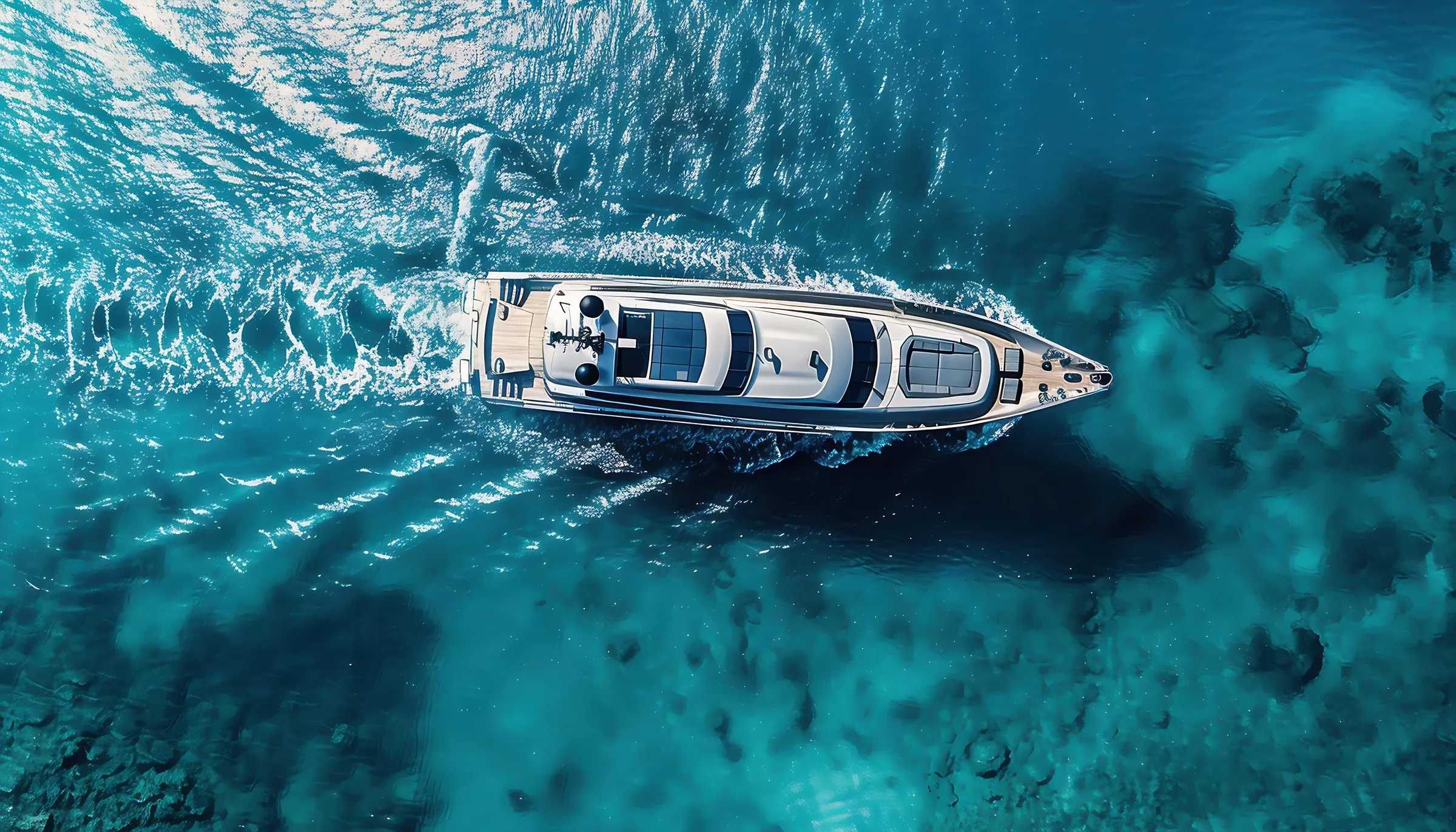
Group size, pace, shade, cabins and the coves you want to reach: how to decide which yacht to charter in Mallorca, and how to brief the team so the shortlist fits your group.
Which yacht to charter in Mallorca depends less on length than on two questions: how many people are coming, and what kind of day you want. For a small group that wants to cover coastline, a sport yacht makes the most of the hours. For shade, interior space and, on some yachts, a night aboard, a motor yacht is the natural middle ground. A superyacht adds a professional crew, more cabins and the scope for longer voyages, and a sailing catamaran gives a large group one steady deck to share. Every charter comes with a professional captain, so the choice is about comfort and pace, not about who takes the helm.
The four classes at a glance
- Sport yachts: fourteen yachts and day boats from 9 to 22.8 metres, for 6 to 12 guests, built for pace and the swim stop.
- Motor yachts: ten yachts from 12 to 23.6 metres, for 8 to 12 guests, with flybridges, shaded cockpits and more space inside.
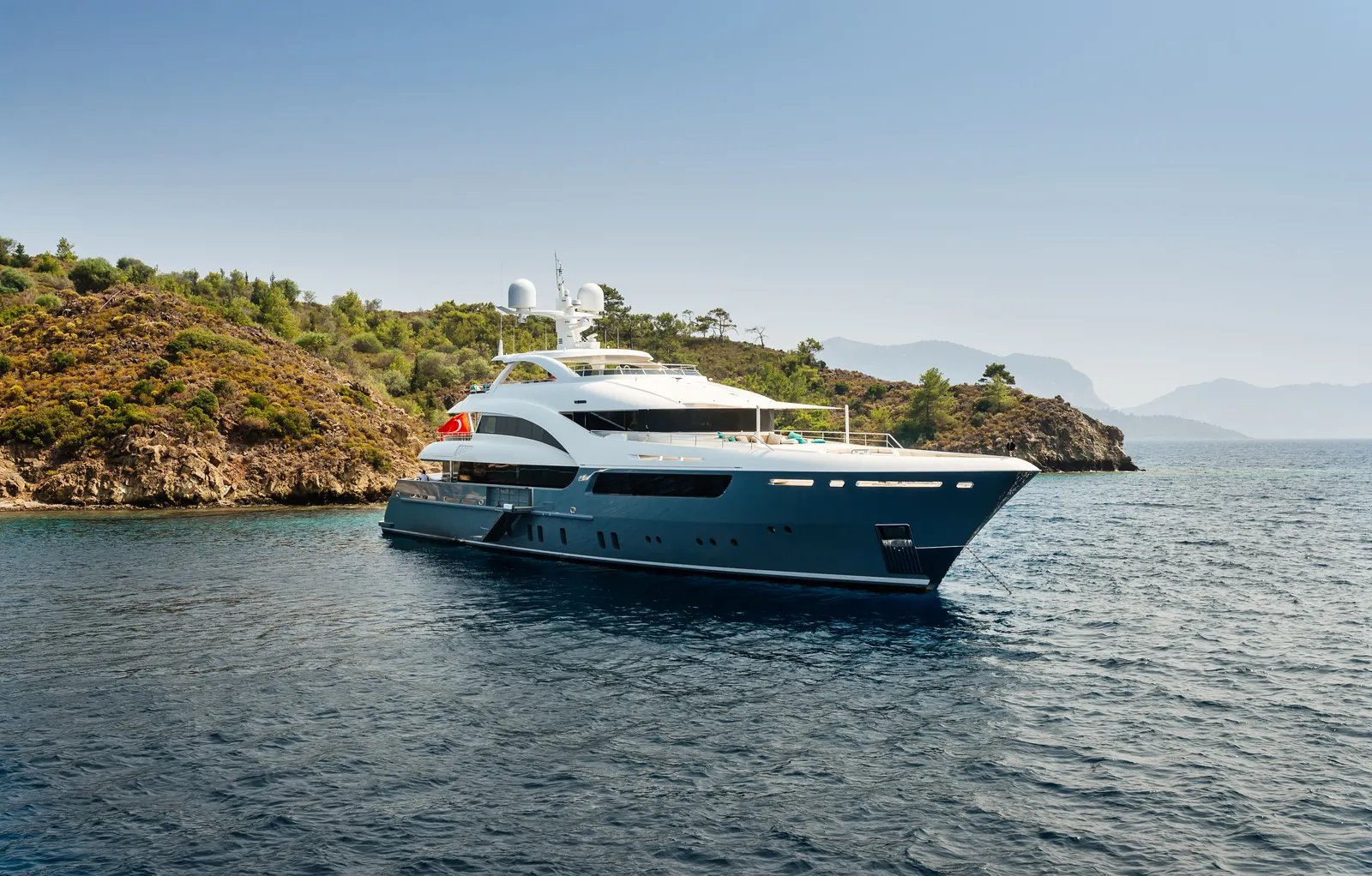
- Superyachts: seven yachts from 24 to 44 metres, from the classic Feadship to the Admiral 44, which has seven cabins and a crew of six.
- Sailing catamarans: two day catamarans of 15.23 and 18 metres, for up to 45 and 65 guests, with wide, level decks.
Start with the number of guests
Every yacht has a maximum number of guests set by its registration and licence, and many charter yachts stop at 12, because a yacht carrying more than 12 passengers is treated as a passenger ship. In our fleet, six of the seven superyachts are listed for 12 guests, the motor yachts for 8 to 12 and the sport yachts for 6 to 12. For a larger party, the two catamarans and the classic Feadship are listed for up to 45 or 65, keeping everyone on one deck. Treat the listed figure as a ceiling rather than a target: a long day in July feels different with every seat taken, and for a night aboard the cabins set the number.
Pace and range, or space and calm
Sport yachts are built for pace. On a planing hull the boat rises onto the surface at speed, and cruising speeds of 20 to 30 knots are common for the type; the Pershing 7X cruises at 42 knots and reaches 50. Pace turns into reach, so a single day on a sport yacht can take in Sa Dragonera or the calas of the south-east. The trade-offs are fuel, which rises noticeably at planing speed, and comfort in a short chop, where planing hulls can pound and captains slow down.
At the other end sits the displacement hull, most efficient at lower speeds, usually between 7 and 10 knots. The Feadship is the fleet's example, cruising at 10 knots: a quiet, stately pace that suits a long lunch and an unhurried stretch of coast. The sailing catamarans are quiet under sail when the breeze allows, though they do not point as high upwind as a monohull, so the captain may motor some legs.
Shade, deck space and where the group gathers
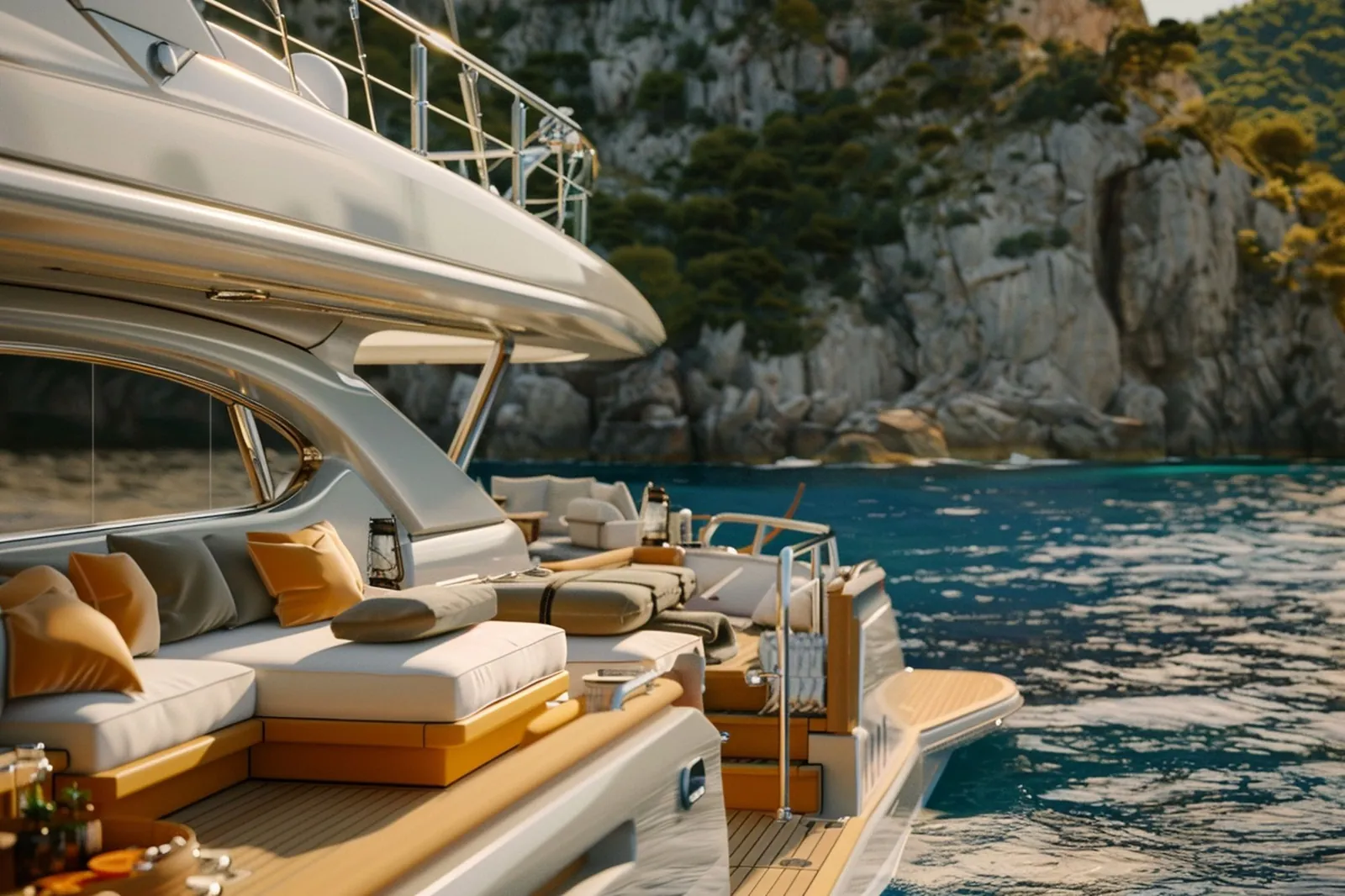
On the water, shade matters more than it seems. The World Health Organization notes that reflective surfaces such as water increase UV levels, and says protection is best achieved by seeking shade and wearing clothes rather than by sunscreen alone. A flybridge, the raised deck above the saloon with its own helm, adds a whole outdoor level, and on yachts of about 15 metres and up a hardtop may shade part of it. Our flybridges range from the Sessa 40 Fly and the Bavaria 42 Fly to the Sunseeker 95.
Sport yachts trade some of that shade for open space: the Fjord 52 and the Tesoro 50 have wide decks for sun and entertaining, and on the two Bluegames the aft deck flows straight into the sea. Catamarans offer more room on deck and sail far more upright: one sailing guide puts a catamaran's heel under sail at about 5 degrees, against 20 on a monohull. With beams of 7.43 and 9 metres, ours have room for a buffet, a toast and the whole group at once.
Cabins and a night aboard
On a day charter, a cabin is somewhere to change or rest out of the sun, and our sport yachts have one to three. For a night aboard, cabins decide the choice. The Sunseeker 76, with four cabins, is at home on an overnight escape, and the Sirena 58 is a long-range cruiser. Among the superyachts, the Admiral 44 is made for extended cruising and the Technema 85 for unhurried island hopping. The two catamarans run as day catamarans, for a day or an evening at sea.
Comfort at anchor is worth asking about. Stabilisers reduce roll; fin systems work best under way, while gyroscopic and zero-speed systems can also steady a yacht at anchor, so ask whether the yacht you are considering has them. Our guides to choosing between a day and a week charter, and to a crewed superyacht week, cover the longer formats.
Coves or open water
If the day is about coves, top speed counts for less than you might expect. Spain's General Coastal Regulation treats an unbuoyed strip of 200 metres off beaches and 50 metres off the rest of the coast as a bathing zone with a limit of 3 knots, and recreational boats may not enter buoyed bathing zones. In the Balearics, anchoring on Posidonia seagrass is prohibited as a general rule, so the captain anchors on sand or uses an authorised buoy. Larger yachts often anchor further out and take guests into the smaller calas by tender, while a catamaran's shallow draught lets it anchor in shallower bays.
Open water rewards planning. Cabrera National Park requires prior authorisation to navigate and moor on its buoys, which are sized for boats up to 35 metres; longer yachts, such as the Admiral 44, need a special authorisation. A crossing to Ibiza and Formentera usually belongs to a longer charter, timed to the forecast. In summer the sea breeze, the embat, usually builds a few hours after sunrise and peaks in the early to mid afternoon, and when the tramuntana blows from the north or north-west, the south-east coast lies sheltered.
If anyone feels the motion
If anyone is prone to seasickness, say so when you enquire. The NHS advises sitting in the middle of a boat, looking at a fixed point such as the horizon and breathing fresh air, and suggests asking a pharmacist about remedies; the CDC adds that it helps to avoid places of greatest motion, such as the bow. No boat is immune to a short chop, so a sheltered route chosen around the forecast matters as much as the class.
How to brief the charter team
Whether you write to a broker or to us directly, a short, specific brief brings a better shortlist than asking for the largest yacht available:
- Your dates, and how flexible they are.
- The number of guests, with children's ages, so suitable life jackets can be checked.
- A day, a sunset, a few nights or a week, and whether everyone sleeps aboard.
- The kind of day: pace and several coves, or one long anchorage and lunch in the shade.
- Places you would travel for, such as Cabrera, Formentor or Formentera.
- The occasion, dietary needs, water toys and anyone sensitive to motion. Motorised toys may require a licence for the rider.
The team then prepares a curated shortlist with photographs, cabin layouts, guest capacity and a written quote for each yacht, so the classes are easy to compare. Prices are on request. Send your brief by WhatsApp, email or the form, and we will propose the yachts that fit your group.